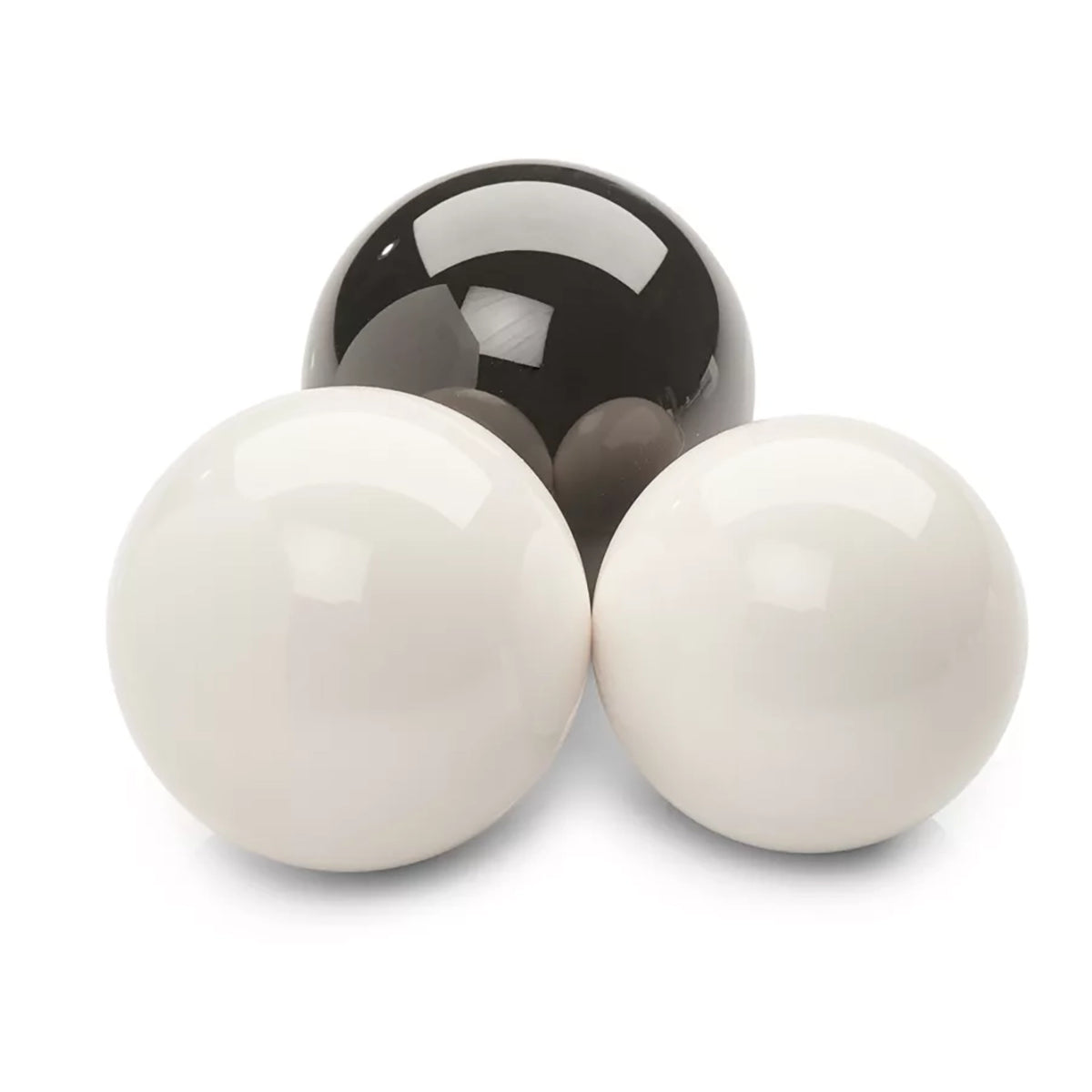
Snooker Balls
Snooker balls are made from phenolic resin, and the quality of that resin is what separates a set that plays true for twenty years from one that goes out of round and starts skidding. It is the one piece of table equipment where paying more buys something you can measure.
Get the size right first
Snooker balls come in several sizes and they have to match the table. Full size and most club tables take 2 1/16 inch (52.5mm), which is the standard competition size and the one most people need.
Smaller tables take proportionally smaller sets, down through 2 inch (51mm), 1 7/8 inch (47.5mm), 1 3/4 inch (44mm), 1 5/8 inch (41mm), 1 1/2 inch (37.5mm) and 1 3/8 inch (35mm). If you have a home table, measure an existing ball before ordering rather than guessing from the table size.
2 1/4 inch (57mm) is American pool size and does not belong on a snooker table. Those are in Pool Balls.
Aramith
Aramith are the Belgian maker whose balls are used at the professional level, and they run several grades.
- Premier. The entry point into proper phenolic balls and a large step up from the resin sets that come with most home tables.
- Tournament Champion. Tighter tolerances and better balance. The 3G and SuperPro 1G versions refine this further.
- Pro Cup. Spotted cue ball, matched to competition specification.
The G rating refers to how tightly the set is matched for weight and roundness. A lower number is tighter. For a home table the difference between grades is real but subtle. For a club table getting daily use, the tighter sets hold their shape longer and earn the difference back.
Dynaspheres
Dynaspheres are the newer alternative and are made to similarly tight tolerances, sold as Phantom 0.5G, Gold 524 1G and Silver 524 1.5G. The 0.5G rating on the Phantom set is the tightest tolerance of anything here. Worth a look if you want tournament grade balls and want to compare against Aramith rather than defaulting to it.
Cue balls and training balls
Cue balls take more punishment than any other ball on the table, because every shot starts with one. A cue ball that has gone slightly out of round will skid on screw shots long before the object balls show any wear, so replacing just the cue ball is often the right call.
Nick Barrow's Ultimate Training Ball and the training ball range are marked so you can see exactly where you struck the cue ball and how it is spinning. If your safety play or your screw is inconsistent, these show you why faster than any amount of practice on a plain ball.
Looking after them
Chalk and skin oil build up on balls and change how they roll, and it happens gradually enough that most players do not notice until they clean a set and feel the difference. Aramith make a ball cleaner for regular use and a ball restorer for sets that have been neglected.
Switching to a low residue chalk slows the build up down considerably. A ball case keeps a set together and stops them rolling around in a cupboard, and a triangle that sits flat is worth having if yours has warped.